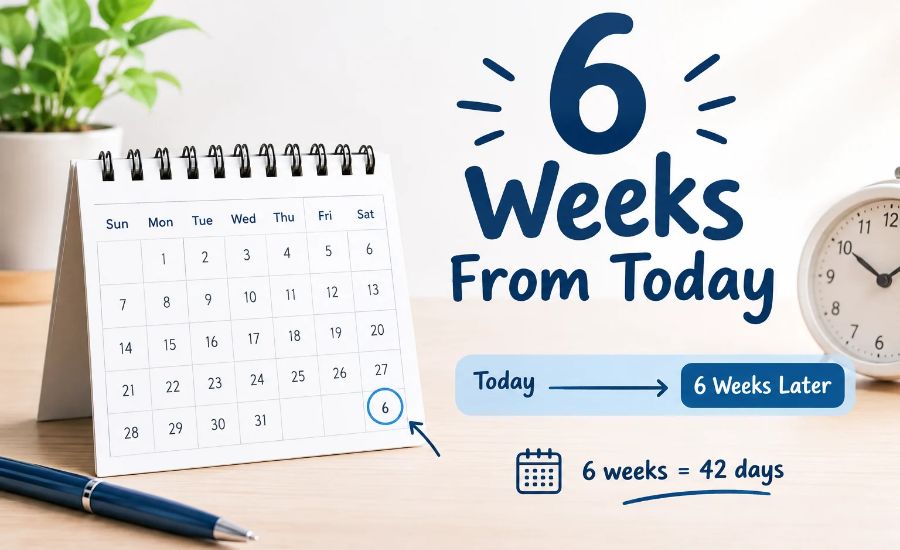
Starting from Friday, October 2, 2026, 6 Weeks From Today, November 13, 2026 — exactly 42 days away, or roughly six weeks give or take. This particular timeframe gets searched for all sorts of reasons: tracking a pregnancy, following a recovery plan, hitting a work deadline, booking a trip, or working toward a personal goal. Below you’ll find the exact date, a quick way to calculate it yourself, and ideas for making the most of those six weeks.
Read More: 39 Weeks From Today: Here’s the Exact Date and What You Can Do With It
Where Does Six Weeks From Today Land?
Friday, November 13, 2026 — that’s your answer. The calculation is simple: six times seven equals 42, and adding those 42 days to October 2 gets you there. Because you’re counting in full weeks, the weekday never budges — start on a Friday, land on a Friday. Worth remembering, since it makes scheduling anything — meetings, appointments, deadlines — a lot more predictable for everyone involved.
Converting 6 Weeks Into Days, Hours, and Months
Six weeks breaks down to 42 days, or 1,008 hours if you want it that granular. Months are messier — six weeks lands somewhere around a month and a half, but not quite exactly, since most calendar months run longer than four weeks. It’s a common assumption that a month equals four weeks, but with those extra few days built into most months, six weeks never divides cleanly into two. That’s exactly why counting in days or weeks beats months when precision actually matters.
A Fast Way to Calculate 6 Weeks From Any Date
There’s a simple mental trick for this. Take your starting date, add 42 days, and work through it month by month. Starting from October 2: October has 31 days, so 29 of those days get you to October 31, leaving 13 days that carry you into November 13. Alternatively, add one month, then tack on 11 more days — same result either way. Or just open your phone calendar, scroll down six rows, and read off the date directly.
Why “6 Weeks From Today” Gets Searched So Often
Six weeks shows up constantly in everyday life as a natural unit of time. It’s substantial enough to produce real change, yet short enough that the finish line stays visible the whole way through. Medical check-ups and recovery timelines frequently run on six-week cycles. Companies lean on it for short sprints and review periods. Whatever the context, people searching this date are usually trying to plan something with a defined start and end, and pinning down the exact day takes the guesswork out of it.
Six Weeks Into a Pregnancy
Six weeks marks an early, often thrilling point in pregnancy — frequently right around when someone first discovers they’re expecting. Since doctors calculate pregnancy from the first day of the last period rather than conception, a “six-week” pregnancy actually means the baby itself is closer to four weeks old developmentally. This is often when the first ultrasound happens, sometimes catching that very first flicker of a heartbeat. If you’re counting forward to estimate a future milestone, keep in mind your doctor’s exam will always give you a more reliable date than any online calculation.
What’s Going On at 6 Weeks Pregnant?
At this stage, the baby is tiny — about the size of a lentil, barely a quarter-inch in length. Despite that, the heart has already begun beating, and early structures for the brain, spine, and other organs are starting to take shape. It’s common to feel drained, deal with morning sickness, notice breast tenderness, or find your sense of smell suddenly heightened. Cravings and mood swings tend to show up too. Staying hydrated, eating smaller frequent meals, and resting when you can all help. Severe pain or heavy bleeding, though, warrants an immediate call to your doctor.
Read More: What Time Was It 22 Hours Ago? A Simple Time Guide
The Postpartum Check-Up at 6 Weeks
This same six-week mark also matters after delivery — it’s typically when doctors schedule the postpartum follow-up visit. That appointment covers how the mother’s body and mind are recovering, touching on sleep, mood, feeding routines, pain levels, and whether there’s enough support at home. It’s a good opportunity to voice any concerns, since while exhaustion and stress are expected, persistent sadness or anxiety shouldn’t be brushed aside. Jotting down questions beforehand helps, since new parents are often too stretched thin to remember them in the moment.
Using 6 Weeks as a Recovery Window
Plenty of injuries and surgical procedures use six weeks as an initial healing benchmark. A fractured bone, for instance, commonly needs about that long before a doctor can properly assess how it’s mending. Marking that date on your calendar after a procedure gives you something concrete to aim for. That said, healing speed varies from person to person, so treat the date as a general guide rather than a guarantee. Stick with your doctor’s instructions on rest, activity level, and follow-up appointments, and resist jumping back into intense activity too soon.
Turning 6 Weeks Into a Personal Goal
A six-week stretch is one of the most effective timeframes for building a new habit without it feeling like a massive undertaking. It’s brief enough to keep your motivation high, yet long enough to actually show results. Options range from daily walking, finishing a book, hitting a savings target, picking up basic phrases in a new language, or cutting back on sugar. Stick to just one main focus so your effort doesn’t get spread too thin. Writing it down, telling someone else about it, and keeping a visible reminder nearby all help — small consistent effort compounds quickly.
A Week-by-Week Breakdown
Splitting six weeks into stages keeps momentum going. Weeks one and two are for setup — gathering what you need and easing in gradually. Weeks three and four are where you build a real routine and push harder, since motivation commonly dips right around here. Week five is for checking progress and correcting anything off track. Week six is your finish line — wrap up strong and acknowledge what you accomplished. Pausing briefly at the end of each week to reflect makes the entire plan far easier to stick with.
Mapping Out Work Projects and Deadlines
Six weeks fits nicely as a timeframe for a short project or a quarterly sprint. Working backward from November 13, you could set a draft deadline at week two, gather feedback by week four, and lock in the final version by week six. Keeping those dates visible to your whole team on a shared calendar leads to confusion and last-minute scrambling. It also helps to pad in a few buffer days near the end, since delays happen more often than not. Clear deadlines, manageable tasks, and regular check-ins are really what gets projects across the finish line on schedule.
Planning Travel Six Weeks Out
Six weeks from today puts you in mid-November — right before the holiday travel rush kicks into gear. If a trip is on your radar, this is an ideal window to start comparing flights, locking in hotels, and requesting time off work. Thanksgiving lands on November 26 in the U.S., just two weeks past this date, meaning prices and crowds can climb fast as that gets closer. Booking ahead of that surge typically saves money and keeps more options open. Double-checking passport validity, visa requirements, and any other travel paperwork early is also worth doing.
Tools That Make Counting 6 Weeks Simple
You’ve got several easy options here. Your phone’s calendar app lets you jump forward week by week and set reminders along the way. Free online date calculators handle the addition of days, weeks, or months with a couple of clicks. Spreadsheet software like Excel or Google Sheets can add 42 days to a date using a basic formula. Pregnancy-specific due date tools, meanwhile, typically calculate from your last period instead. Whatever method you go with, running the numbers through a second tool is a good habit to avoid small errors.
Where Week-Counting Mistakes Usually Happen
A handful of common slip-ups can throw your date off. Counting today itself as “day one” is a frequent one, which can shift your final answer by a day. Mixing up weeks and months is another, since six weeks and a month and a half aren’t always perfectly interchangeable. People also sometimes forget that the weekday-matching trick only holds when you’re counting in complete weeks. In pregnancy contexts specifically, confusion often crops up between counting from conception versus from the last period — those produce two different dates, so know which applies to you.
Making the Most of Your Six Weeks
Six weeks has a habit of flying by faster than expected, so it pays to start with a plan right away. Write your goal down clearly, pick a specific end date, and log your progress weekly, even when the steps feel small. Lean on a friend or family member to help keep you accountable. Missing a day isn’t the end — just pick back up the next morning. Steady, consistent effort beats occasional bursts of motivation, and by the time Friday, November 13, 2026 arrives, you’ll likely be glad you started today instead of waiting.
Frequently Asked Questions
What’s the exact date 6 weeks from today? Friday, November 13, 2026.
How many days is that? 42 days.
Is 6 weeks basically the same as 1.5 months? Close, but slightly shorter, since most months run a bit longer than four weeks.
Is six weeks a reasonable timeframe for a goal? Yes — long enough to establish a real habit, short enough to keep your motivation up.
Wrapping Up
6 weeks from today lands on Friday, November 13, 2026, and what that date represents depends entirely on your own situation. It could mark a medical appointment, a project due date, an upcoming trip, or the close of a personal challenge you set for yourself. Having the precise date in hand lets you plan with confidence and take that first step right now. Use the strategies above, stay consistent, and let these next six weeks work in your favor.